The next journey begins Poland and Rwanda 2019

The next journey begins  Poland and Rwanda 2019
2019 adventures

Thursday, July 31, 2014

July 21 Seoul


July 21- Seoul
Hotel Vabien II is very nice! I changed roommates because Robin is not participating in the final day. I am now with Sheri from Toronto, a retired teacher of the deaf and hearing impaired. We went to the North East History Foundation located just down the street, for our sessions.
Seoul looks like Manhattan! Modern, lots of cars -none from Japan- all Kia and Hyundai. No one finds me interesting or different as in China.  The obvious standard of living is higher and we have INTERNET again!  I defiantly felt the difference being in China as opposed to Korea. Especially in Harbin, where the tv had only military movies- no news. I felt very isolated from the world.
The morning session included Korean students who did some presentations in regard to the Comfort Women. The director of the center, Dr King presented to us. The center was established in 2006 to foster peace and reconciliation in NE Asia. Teachers also spoke about peace education. Professor Asakawa ( Japanese) started the “Bridge for Peace” program. The other presenters included Arita Jungya- secretary of the Nigata Peace Center, Hae Soo History teacher at Bopung HS in Korea. The history teacher told us that their SAT includes extensive questions about national perspective in modern day politics. The teachers spoke about the ‘grades’ being so important and that issues are on the back burner. School is from 8 am until well after 4 pm and many stay until 10 pm for ‘extra’ classes.
Peace is difficult to define in Korea. Text books are skewed and biased. A new text book is in the works for history, that focuses on the relationship of North and South Korea in order to create global citizenship. Education in Japan in remiss about  teaching WWII. Many stories told about the atomic bombs but virtually nothing about Japan’s part in China. However, more teachers in Japan are on board to change this paradigm. The teaching about chemical warfare and forced sexual slavery is taught ‘under the radar.’ Korean curriculum is nationalistic. Anti- Japanese rhetoric is embedded in text books.
Over lunch, I was able to talk to the students, who all spoke English quite well. I asked about what they learned in school about The Holocaust. They responded that they did not learn much about European Jewry and that the Holocaust is about 2-3 pages in their text books.
We were shown a documentary which featured Japanese soldiers who spoke about some of the atrocities they committed and, similar to the Nazis, said they were following orders. Although some regretted what they did. One soldier said he looted, killed in the name of the Emperor- but rape he did that for himself! They felt themselves a superior race therefor it was easy to commit these crimes against humanity (sound familiar?). The documentary also included the testimony of a Philippine civilian (Phillipines were also invaded by the Japanese and subjected to atrocities) ironically, he tells about the terror and then drives away in a Honda.

Comfort Women is a focal point of this trip. The euphemism used is similar to what the Nazis used such as resettlement, special treatment, bath etc. The survivors do not use the term and prefer to be called “Halmoni” meaning grandmother. Much like my students who have met Holocaust survivors, these teens in Korea, China and Japan who are fortunate enough to meet any of the known 54 comfort women, are the last generations what will meet any of them in person.  They are all in their 80’s and 90’s. There is little government involvement in support of the remaining women, although the “House of Sharing” a place in Korea that is like an assisted living community for these women is subsisted as a welfare residence. There was an estimated 250,000 women forced to become sexual slaves to the Japanese military- an unprecedented event in wartime. The survivors remained silent for many reasons: Cultural shame, embarrassment, fear and wanting to forget. It was not until the 1990’s that any one came forward with her story.  The Japanese government has denied the forced sexual slavery and every Wednesday for 20 years there is a demonstration in front of the Japanese embassy by civilians, school children, the remaining Comfort women and all advocates that want to see the Japanese government pay restitution and acknowledge what they did. Our group attended the Wednesday demonstration.  It is peaceful but nonetheless many police are there. The embassy closed its blinds during the demonstration and use back entrances to avoid any contact with the demonstrators.  
Photos from Museum, survivors, and demonstration day


July 20 Harbin and Seoul


July 20- afternoon
On the plane on the way to Seoul. This morning there were hurricane force winds and a deluge of huge proportions. I was talking to Robin when I eyed water on the floor. Well, water was gushing into our room through a closed window! Lucky for Robin, whose suitcase was on the floor- that the rain only slightly dampened her suitcase.  We tried communicating to the front desk about this and all they could say was they would send someone to open the window! This Holiday Inn was like a minus one star hotel.  I have no complaints; it was just another experience. Bu it is worthy of some description.  It was outside of town, had dirty carpets, one elevator, no coffee , the food was not very appealing, and wifi did not work. I got plenty of exercise using the stairs to up and down from the sixth floor.  I heard loud noises and yelling from outside my room because a conference room was next door with what seemed to be motivational women’s speaker and group. BUT we did have dumplings last night at a restaurant nearby.
Vegetable, chicken, pork, beef- you name it. We all wished we had the left overs today since we have not really eaten. Prior to that we visited the plaza where the Russian Orthodox Church is.  Russian soldiers built this church when they were in Harbin. The influence can be seen on much of the architecture in Harbin. The people have a different look and I understand have a Russian touch to their accents.  We people watched and enjoyed the time.  Once again I was stopped several times for photo ops. 
In Harbin China -close to Russian border-  nothing on tv but military movies  LOL. photos from large outside shopping area.


July 19 Activities
After Japan invaded Manchuria in NE China Chemical weapons were produced. Over 3000 Jre factory in Harbin Japanese workers worked in the chemical weapon factory. Harbin is North of Korea and South of the Russian border.
We visited this authentic site where experiments were done on Chinese people as well as POW’s from America, Britain, and China. Vivisection was done ( live surgery without anesthetics) Many experiments involving biological and chemical weapons were subjected on to the victims here. This is known as UNIT 431.  The museum is the actual location of the offices of the Japanese doctors and officials who performed these horrific acts.  Very reminiscent to the experiments of Dr Josef Mengele in Auschwitz-Birkeneau.  Like the Nazi’s, The Imperial Army tried to destroy much of this area. Today the excavation is almost complete.  I was a little concerned- and I still am- being on this site that biological experiments were conducted and breathing the air! Artifacts in the museum include medical equipment, vivisection tables, torture tables, medicine bottles, tools etc. that are all proof of the events that went on in this Unit 431. They also did experiments on animals with an area devoted to breeding and experiments on animals such as rabbits and squirrels. The use of anthrax and mustard gas was prolific. There was a display of documents that were copied by the curator and researcher of this facility. He obtained the documents at the National Archives of the USA. They show specific areas of the body, very detailed in description and drawn, They describe the effects of specific chemicals on specific parts of th human body. The USA got the original Japanese documents and translated them into English. They did not make them public. There was also a working crematory on this site that was used to dispose of Human beings. The museum again is reminiscent of the USHMM and Yad Vashem.
The longh term effects of this is on going.  Two survivors of chemical contamination spoke to our group. They unwittingly were exposed to deadly chemicals during their work as construction workers in 2003. The soil was contaminated by the chemicals produced in the area.  One witness said that his daughter, who was 12 yrs old, was also contaminated and now 10 years later is very depressed, and has few friends.  Both these men have multiple health issues that inhibits their ability to work. They live with their elderly parents.  I asked what the Chinese govt is doing. My assumption being that in a socialist government that they would be eligible for health benefits. Apparently they are not, However, there has been lobbying to have this changed. I felt very emotional talking at lunch with these men. Especially the one with the daughter who said tyo us he has no idea what will become of her. Their issues are, headaches, breathing, chronic diarrhea, kidney and liver problems, open sores and ulcers
There are few and virtually no survivors of the biological weapons used.. I must say I was a bit apprehensive standing in the open field where the evacuating is being done, and knowing what went on there. I thought what was I standing n and breathing in?
Interesting; that representatives from Germany have visited this site to begin joint research on the medical experimentation done to the Chinese and the Jews during this time. Much is known about Dr. Josef Mengle but we do not know much about Shiro Ishi, who orchestrated Unit 431.

Photos of the site, museum and the survivor who was contaminated along with his daughter


while working in the soil in 2004.

July 17


July 17
Yesterday we left Shanghai and traveled 


roads cluttered with trucks and the landscape changed into a sea of factories along with traditional looking Chinese homes, towns etc., We passed IKEA WALMART and other big stores where all our USA good come from.
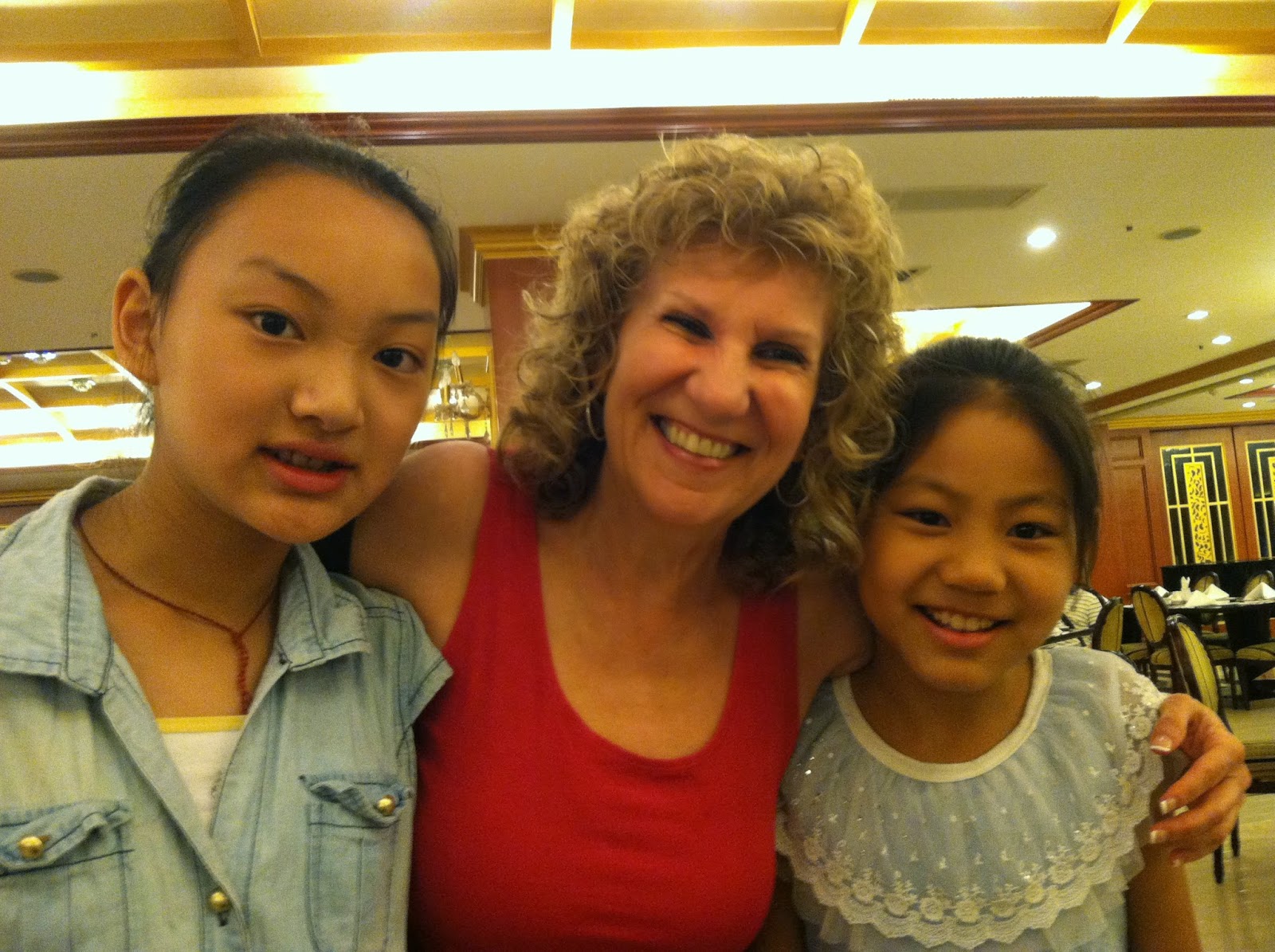
We soon arrived to Zhou Zhaung- a water town that was very nice to visit but very crowded and touristy, Water gondolas, shops galore but a Ming dynasty home was open to visit, The entrance way was high indicating a high ranking family. Our Beijing  tv reporters followed us. Two 23 yd old young men, so pleasant and nice.  One oddity is the amount of people who want to take my picture. They consider my hair blonde and the curls are an oddity as well. They stare, point, take photos its hilarious.
Wee visited the famous tomb of the father of China Sun Tat-Sen who overthrew the last emperor of China, unfortunately it closed and we were not able to climb the hundreds of steps to the mausoleum.
Finally we arrived to Nanking city of 9 million and home of our guide Fa Fay. It was the capitol of China when the Japanese invaded killing hundreds of thousands of innocent civilians.  However- like most cities- it is modern and very beautiful, pedestrian malls were open well past 10 pm on a week night. The Confucius temple was closed but we could see the outside.  A 600 year old wall (reminds me of an older one in Jerusalem) surrounds the city. Robin and I walked around until we gave in to the exhaustion of the day. Today we will visit the site of the massacre and meet with historians, and survivors